
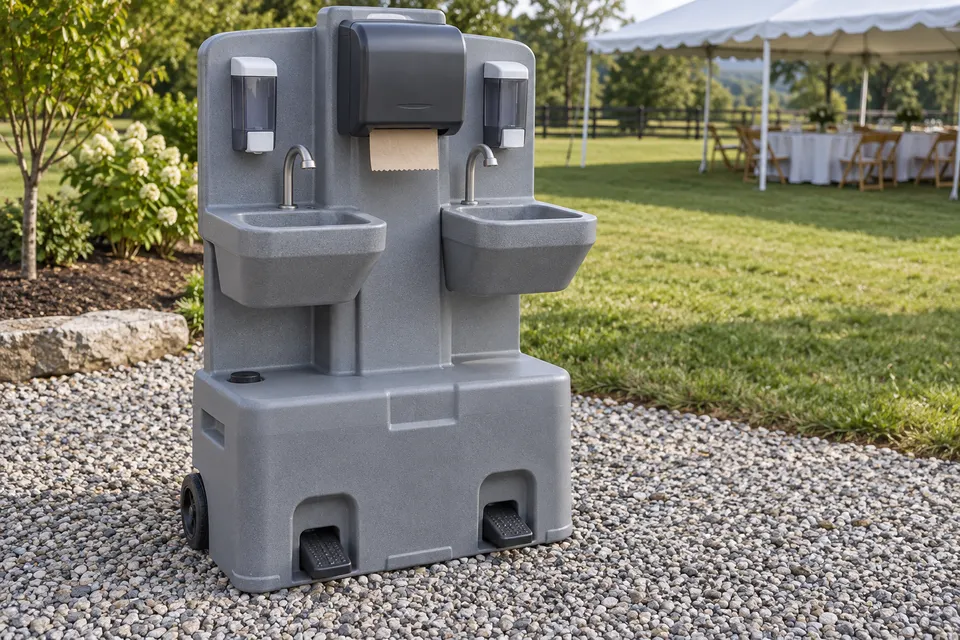
Choose the experience before choosing the model
Standard units can meet a straightforward temporary restroom need, while upgraded units and trailers offer different features. Ask which features are included rather than assuming every premium option has the same fittings. A trailer also needs enough room for steps, doors and circulation, and its utilities must be confirmed. If accessible facilities are needed, plan them alongside the other units rather than trying to add them into leftover space.
Coordinate with the venue and other suppliers
Share the venue entrance, load-in hours, property contact and any restrictions on the placement surface. Keep restroom delivery from competing with catering vehicles or guest parking. A screened location may look discreet but must remain easy to find and reachable for servicing. Walk through the proposed route with the venue contact, including how a person using a mobility aid will get there.
Plan beyond the main event hours
Ask whether facilities need to cover setup staff, vendors and cleanup as well as guests. A multi-day event may need an intermediate service visit; a longer rental period alone does not define how frequently the unit is cleaned. Explain alcohol service, food service and concentrated breaks so the use pattern can be considered in the rental discussion.
For a worksite, switch to a crew-led plan
Construction requests should focus on shift size, project duration, handwashing and dependable service access. Mark a location outside lifting zones and material staging. As the work area changes, tell the rental contact before access becomes blocked or a unit needs to be relocated.
What a useful Frisco inquiry includes
Include the actual site address rather than only the city name, your preferred dates, the largest number of people using the facilities at once and an estimate of rental duration. Mention working permanent restrooms, guest accessibility needs and any restriction on vehicle access.
Ask for equipment, service arrangements and collection to be confirmed before relying on the setup. The venue or property manager should also check placement permissions and local requirements. This guide is rental planning information, not a statement that a site has already been approved.